
Most car trouble does not arrive without warning. A battery that cranks a little slower, a brake pedal that feels slightly different, a tire that looks a bit low: these small clues usually show up weeks or months before a breakdown. The easiest way to stay ahead of them is to follow a simple maintenance schedule. This checklist is written for Orlando drivers and breaks routine car care into easy steps you can follow weekly, monthly, seasonally and yearly. It will help you keep your car reliable, avoid surprise repairs and know when it is time to call a professional. If you have been looking for a car maintenance checklist in Orlando that is practical and easy to follow, start here.
Why a Maintenance Schedule Matters in Orlando
Central Florida is hard on cars. Long, hot, humid summers stress batteries, belts, hoses, tires and air conditioning. Heavy afternoon storms test your wipers, brakes and tires. Daily traffic on busy roads adds wear to brakes and fluids, and short trips around town can be tougher on a car than people expect. A regular routine helps you catch wear early, when repairs are usually smaller and easier to schedule. It also protects your safety, since the parts that wear fastest, such as tires, brakes and lights, are the same ones you depend on every day.
One important note before you start: every vehicle is different. Your owner’s manual contains the maintenance schedule designed for your specific car, including recommended fluids, intervals and procedures. Treat this checklist as a general guide and follow your manual whenever the two differ.
The Quick Weekly Checks
These take only a few minutes and can be done in your driveway or while you fill the tank.
- Look at your tires. Walk around the car and look for tires that appear low, bulging or damaged. A tire that looks lower than the others is worth checking right away.
- Test your lights. Headlights, brake lights, turn signals and hazards should all work. A quick check against a wall or storefront window at night can reveal a burned out bulb.
- Watch the dashboard. When you start the car, notice whether any warning lights stay on. Never ignore a warning light that comes on while driving.
- Notice how the car feels. Pay attention to new noises, vibrations, pulling or changes in how the brakes and steering respond.
- Check under the car. If you see a fresh puddle or stain where you park, take note of the color and have it looked at. Some water from the AC on a hot day is normal.
The Monthly Checklist
Tire pressure and condition
Check tire pressure at least once a month, and before long trips, when the tires are cool. Use the numbers on the sticker inside the driver’s door or in your owner’s manual, not the number printed on the tire itself. Florida heat can change pressure quickly, and under inflated tires wear faster, hurt handling and use more fuel. While you are there, look at the tread and sidewalls for cracks, cuts or uneven wear.
Fluid levels
Check the fluids your manual tells you to check, usually including engine oil, coolant, brake fluid, power steering fluid if your car has it, and windshield washer fluid. Park on level ground and follow the instructions in your manual. Never open a hot radiator or coolant reservoir cap, since the system can be under pressure and very hot. If you notice that any fluid level is dropping on a regular basis, that can point to a leak and deserves a closer look.
Wipers and washer fluid
Florida’s sun bakes wiper rubber, and sudden downpours demand that your blades work well. Look for cracks, splitting or streaking. Replace worn blades and keep the washer reservoir full.
Battery and terminals
Look at the battery and the terminals for white or blue crusty buildup, loose cables or a swollen case. Heat shortens battery life, so a battery that has been in service for several years deserves extra attention. If your car is slow to start, the problem could be the battery, but there are many other possible causes. Our guide on the top 10 reasons your car won’t start can help you sort through them.
Air conditioning
Run the AC at least briefly every month, even in cooler weather, and notice whether the air is cold, the airflow is strong and everything smells normal. A weak AC is easier to address before the hottest part of the year.
The Seasonal Checklist
In Orlando, the seasons that matter most are the long hot summer with its daily storms and the milder months in between. Use these as natural checkpoints.
Before summer and the rainy season
- Replace worn wiper blades and clean the windshield inside and out.
- Inspect tires for tread depth and damage, since wet roads demand good grip.
- Have the battery tested if it is more than a few years old or has been slow to crank.
- Check the coolant level and look at the hoses and belts for cracks, bulges or fraying.
- Make sure the AC is blowing cold, and have it inspected if it is not.
- Test the brakes. Listen for squealing or grinding and notice any soft or spongy feeling in the pedal.
After the heat of summer
- Check the tires again for heat damage and uneven wear.
- Look for new leaks or drips.
- Inspect belts and hoses, since heat ages rubber quickly.
- Replace the cabin air filter if it is dirty. Your owner’s manual will say how often.
Before holiday travel and road trips
- Check tire pressure and condition, including the spare if your car has one.
- Top off fluids and make sure the oil is in good shape.
- Test all lights and the horn.
- Pack a basic emergency kit with a flashlight, a phone charger, water and basic tools.
The Scheduled Service Items
Some items are not about quick checks. They are about regular service at the intervals your manufacturer recommends. These are the common ones to keep on your radar. Look in your owner’s manual for the exact schedule that applies to your car.
- Oil and filter changes. Fresh oil keeps the engine lubricated and clean. The right type and the right interval depend on your engine and how you drive, and your manual explains both.
- Tire rotation and alignment. Rotating tires helps them wear evenly. If the car pulls to one side or the steering wheel is off center, ask about an alignment.
- Brake inspection. Pads, rotors and brake fluid wear over time. Have the brakes inspected regularly and sooner if you hear noises or feel changes.
- Engine air filter. A clogged filter can hurt performance and fuel economy.
- Cabin air filter. This helps airflow and keeps the air inside the car cleaner.
- Coolant service. Coolant breaks down over time and should be replaced according to your manual.
- Transmission fluid. Many vehicles call for service at certain intervals. Follow your manual.
- Spark plugs and ignition parts. Worn plugs can cause rough running and poor fuel economy.
- Belts and hoses. Inspect them regularly and replace them as recommended or when they show wear.
- Battery testing and replacement. Have the battery tested regularly, especially as it ages.
If your car is running rough, getting poor mileage or hesitating when you accelerate, it may be due for a tune up. Our post on the signs your vehicle needs a tune up explains what to look for.
Warning Signs You Should Not Ignore
A checklist is useful, but your car will also tell you when something is wrong. Schedule an inspection promptly if you notice any of the following:
- A warning light that stays on or flashes.
- Grinding, squealing or clicking noises from the brakes, engine or wheels.
- A temperature gauge that climbs higher than usual.
- Steering that feels heavy, loose or vibrates.
- A car that pulls to one side or shakes at certain speeds.
- Smoke, burning smells or the smell of fuel.
- Hard starting, rough idling or stalling.
- Fluid leaks under the car.
Warning lights and safety issues, especially those involving brakes, steering, overheating or a flashing check engine light, should be taken seriously. If you are unsure whether it is safe to keep driving, check your owner’s manual and contact a professional.
Keep a Simple Maintenance Record
A short record makes everything easier. Write down the date, the mileage and what was done each time you have service or a repair, and keep your receipts. A record helps you remember what is due next, helps a technician understand your car’s history, and can be useful if you ever sell the vehicle. A notes app on your phone or a small notebook in the glove box works just fine.
How a Mobile Mechanic Makes Maintenance Easier
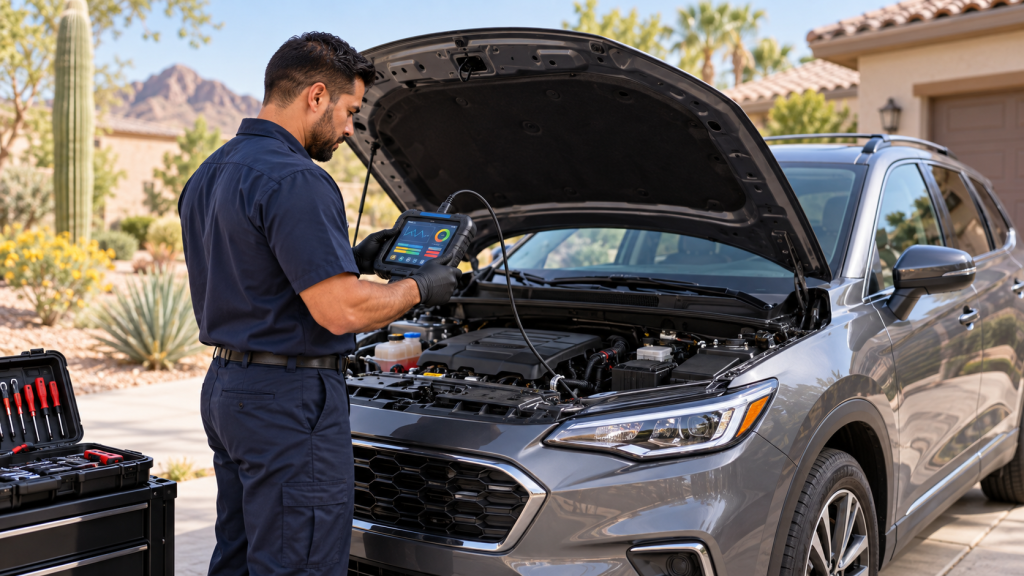
The biggest reason people put off maintenance is time. Dropping a car at a shop, waiting around and finding a ride is a hassle, especially in Orlando traffic and summer heat. A mobile mechanic removes much of that. A technician can come to your home or workplace to handle many routine services, inspections and repairs, so you can keep your day on track. Ask about scheduling regular checkups so you are never caught off guard.
Keep in mind that some jobs need specialized equipment and may need a shop. A good technician will be upfront about what can be done at your location and what cannot.
Your Printable Checklist at a Glance
- Weekly: look at tires, test lights, watch the dashboard, notice new noises, check under the car.
- Monthly: check tire pressure, fluids, wipers, battery terminals and the AC.
- Seasonally: prepare for the rainy season, inspect belts and hoses, check brakes and get the battery tested.
- As scheduled: oil changes, tire rotations, filters, coolant, transmission and brake service, per your owner’s manual.
- Always: act on warning lights, strange noises and changes in how the car drives.
Staying on top of maintenance does not need to be complicated. A few minutes of attention each week and a regular service plan can keep your car dependable and save you from costly surprises. If you would like help building a service schedule or getting your car checked, visit our homepage to learn more, or contact us to schedule a visit.